
This post may contain affiliate links. Please read our disclosure policy.
Italian Penicillin (Mom and Nonna’s Cure for Everything) 🍲
Pastina to us, Italian Penicillin to everybody else. Growing up, this is what showed up the minute anyone got sick — Mom and Nonna had a pot going within the hour, and I swear within a day we were feeling better. They had all the tricks and old wives’ tales to fix everything. This was the big one.
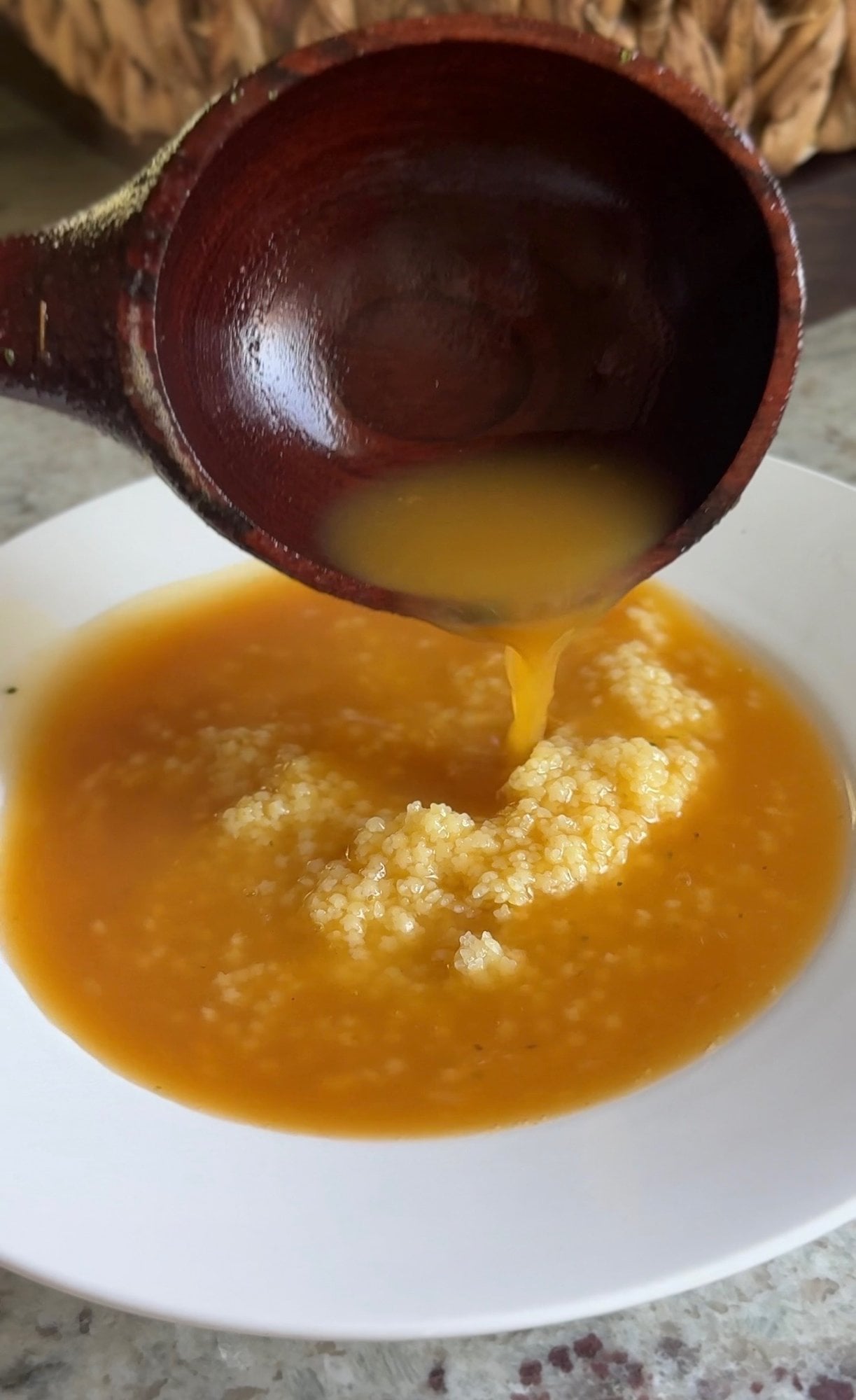
Here’s what makes it theirs: the vegetables simmer in the broth for the better part of an hour, then get blended right back into it. That’s where the body comes from. No cream, no roux, just carrots and celery and onion doing the work. Tiny stars, a mountain of parmigiano, and that’s it.
I make it for Gabriella and Anthony now, and I finally get how much those little pots meant. Another hug in a bowl. Enjoy!
As an Amazon Associate, I earn from qualifying purchases.
Equipment
- Stock pot / Dutch oven
- Blender / Immersion Blender
- 1 Ladle
- 1 Slotted spoon
Ingredients
- 4 cups organic chicken or vegetable broth homemade or store-bought
- 6 cups water
- 3 celery ribs cut in half
- 3 carrot stalks peeled and cut in half
- 6 garlic cloves whole
- 1 yellow or white onion whole
- 1 tsp salt
- 1-2 tbsp chicken bouillon powder more to taste
- 1 lb Pastina
- Parmigiano reggiano cheese for topping
Instructions
- In a large stock pot, combine water and chicken (or veggie) broth.
- Add the celery, carrots, garlic, onion, and salt to the pot and bring to a boil over medium-high heat.
- Once boiling, reduce the heat to medium-low, partially cover the pot, and let it simmer for about 45 minutes.
- After 45 minutes, use a slotted spoon to remove the vegetables. Place them in a blender along with two full ladles of broth and the chicken bouillon, then blend until smooth.
- Add the blended veggies back into the pot of broth and give it a good stir.
- Cook the pastina separately. Once it’s ready, pour the flavorful broth over it, and don’t forget the final touch, a sprinkle of Parmesan cheese!
Nutrition
If you make this recipe, I’d love to see it! Tag me on Instagram @thecookingmawma and tell me who you’re making it for. These stories are my absolute favorite part of sharing recipes with all of you.
Tips for Making This Recipe
Cook the pastina separately. I know it’s an extra pot. It matters. Pastina cooked straight in the broth drinks all of it and you end up with porridge instead of soup. Boil it on its own, drain it, and spoon the broth over it in the bowl.
Don’t skip the blend. Pulling the vegetables out at 45 minutes and blending them with a couple ladles of broth is the whole recipe. That’s what gives it body, no cream needed.
Leftovers keep 4–5 days. Store the pastina and the broth in separate containers or you’ll have a pot of mush by tomorrow.
Frequently Asked Questions
What kind of pastina should I use?
Is there chicken in this?
Why do you call it Italian Penicillin?
Never Run Out of Dinner Ideas
One new family-favorite dinner in your inbox each week, made with love.
My 5 Most-Loved Pastas, yours when you join

This sounds delicious and I wanna make it as soon as possible. I don’t have a blender, but I do have a large food processor. Will that work the same on the vegetables?
Hi Kimberly! A blender is best as it creates the silky, smooth texture for this soup but I think a food processor would quickly work on the fly. It may just create a chunkier, less smooth consistency, and it’s not meant to really hold liquid, so I would be very careful and work in small batches to process, and also allow the vegetables and liquid to completely cool prior to processing to ensure safety.
• Let the soup cool down: Never put boiling soup into a food processor. Hot steam can rapidly build pressure, causing the lid to blow off and spray hot liquid. Let it cool to a warm temperature first.
• Work in small batches: Fill the bowl no more than one-third to one-half full. Keeping the liquid level well below the top of the central blade spindle is the only way to prevent severe leaking.
• Strain and blend the solids first: For the best results, use a slotted spoon to transfer the cooked vegetables and a small splash of broth into the processor. Use the standard S-blade to puree the solids into a thick paste first, then stir that paste back into your main pot of liquid broth.
• Pulse first: Use short pulses to break up the large chunks before running the machine continuously
Heerlijk!!!
Delicious and so so easy to make! This will become a staple in my family. Thank you for sharing!
Thank you, Lisa <3 I'm so happy your family loved it and it will stay with you all! Xoxo
Forgive me I also use the 2 teaspoons of the powdered chicken bouillon as well!!
Delicious
Thank you so much, Dolores 🙂 So glad you love it.